
How to Search Criminal Dockets
Texas runs one statewide system for case information and documents: re:SearchTX. Type an exact cause number if you have one. Without it, search a party name. Filter by Dimmit County, court, criminal category, filing date, or judge. The official guide offers Cases, Filings, Text in Documents, and Hearings modes. Results can open Case Details. Sign-in is sometimes needed for saved tools and document access.
Pick the right court before you search. Felony dockets live at the district level. Class A and B misdemeanors land in the constitutional County Court. Class C cases may sit with a Justice of the Peace. They may also go to the Carrizo Springs Municipal Court. A search at the wrong level can come back empty. That holds even with a perfect name spelling.
- Gather the cause number, full public party name, likely filing year, and charge level.
- Open re:SearchTX and choose Cases or Hearings, then narrow the county, court, and criminal case type.
- Open the likely match and confirm the court, cause number, filing date, status, and party role.
- Read events in date order, separating charges, bond, settings, pleas, orders, sentencing, and disposition.
- Ask the proper Dimmit County clerk for a public copy or current status when an item is absent or unclear.
Dimmit Criminal Dockets Start Local
For a felony, the fastest route is the Dimmit County District Clerk. The official district-clerk directory names Maricela G. Gonzalez. It lists criminal district records as supported. It also identifies Local Government Solutions as the office's case-management system. That LGS entry describes the clerk's internal system. It is not a public search link, so do not confuse it with re:SearchTX.
A County Court misdemeanor belongs with the Dimmit County Clerk. The official county page lists Claudia McDaniel at 103 N 5th Street, Carrizo Springs, Texas 78834. The telephone number is (830) 876-2323, option 5. The call tree routes criminal and probate calls to option 1. When you request a court record, name the court and the cause number if known. Include the document, the date range, the copy type, and how you want it delivered. Ask for a fee quote before the office processes anything.
Clerk split: The District Clerk keeps district criminal dockets, while the County Clerk keeps the constitutional County Court criminal docket.
What a Criminal Docket Shows
A Dimmit County criminal docket opens with identifying fields. It then runs through activity in time order. An official field inventory covers court and location, cause number, criminal category and type. It also lists initiation date, status, judge, public party roles, counsel, filings, hearings, documents, and disposition. A generic code like CAUSE NUMBER AS ASSIGNED stands in for the local format. Formats vary by court. No real person's record is used as an example here.
| Header | Court, location, cause number, criminal case type, filing date, status, and assigned judicial officer when supplied. |
|---|---|
| Roles | State or prosecution designation, defendant, counsel, representation role, and public appearance data. |
| Events | Charging paper, bond, arraignment, plea, discovery, motions, hearings, resets, orders, and notices. |
| Documents | Document title, filed date, page count, link or purchase status when integrated and public. |
| Outcome | Judgment, sentence, supervision, dismissal, appeal, mandate, closure, or other disposition field. |
Money rows may cover bond, court costs, fines, restitution, payments, and balances. Not every Dimmit County ledger is public online, though. A balance is not a conviction and not a full account of the case. Read it next to the judgment and disposition.
Dimmit Criminal Court Directory
The Texas Judicial Branch's live court directory is the tool for confirming the right court and public office. Use it before a docket search or a clerk call. It is a directory, not a case database. Controls let you narrow by court type, county, court name, city, appellate district, and administrative region. Sort fields are included too. The directory page itself shows how a search narrows the statewide roster down to Dimmit County.
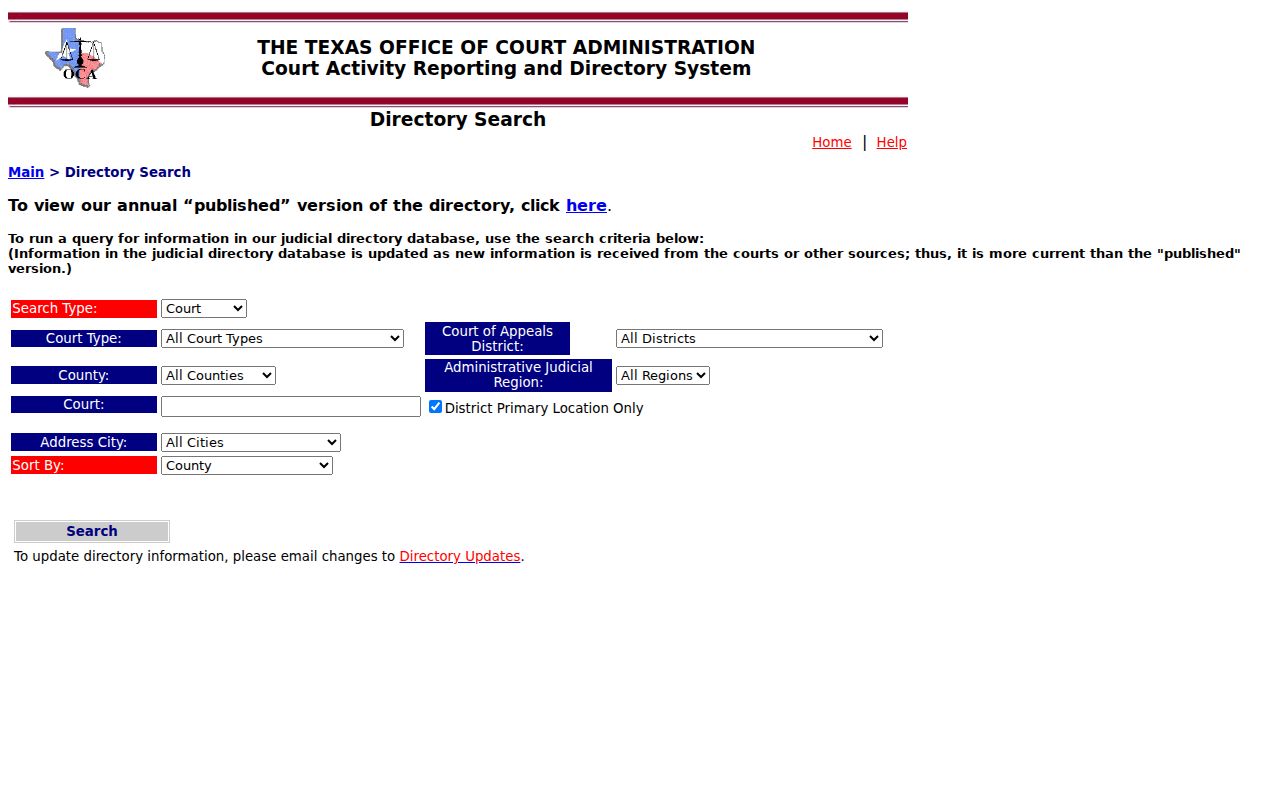
This directory route shines when a docket search fails because the court name, precinct, or clerk was wrong. Its notice says records get updated as new information arrives. So it can beat a yearly PDF for freshness.
Stages on a Criminal Docket
A criminal docket logs steps, not outcomes. Each entry carries its own legal weight. A charging instrument starts the court record. An arraignment takes up the charge and the plea. Pretrial work can include discovery, motions, bond matters, notices, resets, and hearings. A plea agreement or trial can end in judgment, then sentencing, supervision, or appeal entries follow.
Docket flow: Filing › Arraignment › Pretrial › Plea or Trial › Disposition › Sentencing
Read the dates and event titles top to bottom. "Filed" only proves an item entered the court record, not that a judge granted it. "Set" means the calendar got the event, not that it happened. A plea is not a judgment. A disposition is not a single charge note. When a fine or balance shows up, check it against the signed order. Check the full ledger too.
Note: A docket event is an index entry. Confirm the result in the linked order, judgment, or clerk-held public record.
Read Dimmit Criminal Docket Events
Some terms earn their own treatment. They mark distinct stages in Dimmit County criminal cases. A docket may shorten a label while the document behind it holds the legal detail, and plain terms keep a quick docket search from turning into a wrong conclusion.
- Charging instrument
- An indictment or information that states the charge; it is not a finding of guilt.
- Bond
- Security or a financial condition tied to release or compliance, not the final result.
- Arraignment
- A proceeding in which charges and rights are addressed and a plea may be entered.
- Reset or continuance
- A court event moved to another date rather than dismissed.
- Disposition
- The outcome or closing action for a case, count, or event.
Deferred adjudication also needs care. It is a criminal disposition that pairs supervision with a possible later dismissal under the governing rules. It is not expunction. Nondisclosure and expunction are separate legal processes, and the visible docket may not show every restricted document.
Which Court Holds Criminal Dockets
Dimmit County felony prosecutions start in district court. The Texas trial-court jurisdiction guide confirms that district courts hold original felony jurisdiction. Two regional courts, the 293rd and 365th, carry that docket load here. The constitutional County Court takes Class A and B misdemeanors. Call it exactly that. The directory lists no separate County Court at Law for the county.
Class C misdemeanors fall to the justice courts. Dimmit County organizes them as Precinct 1 & 6, Precinct 2, Precinct 3, and Precincts 4, 5 & 7. Inside Carrizo Springs city limits, the Municipal Court handles ordinance and state-law offenses. A city docket never replaces the county or district criminal docket. Federal charges run through the Western District of Texas instead, outside re:SearchTX. The official live results page lists Dimmit County court offices. It helps confirm the roster.
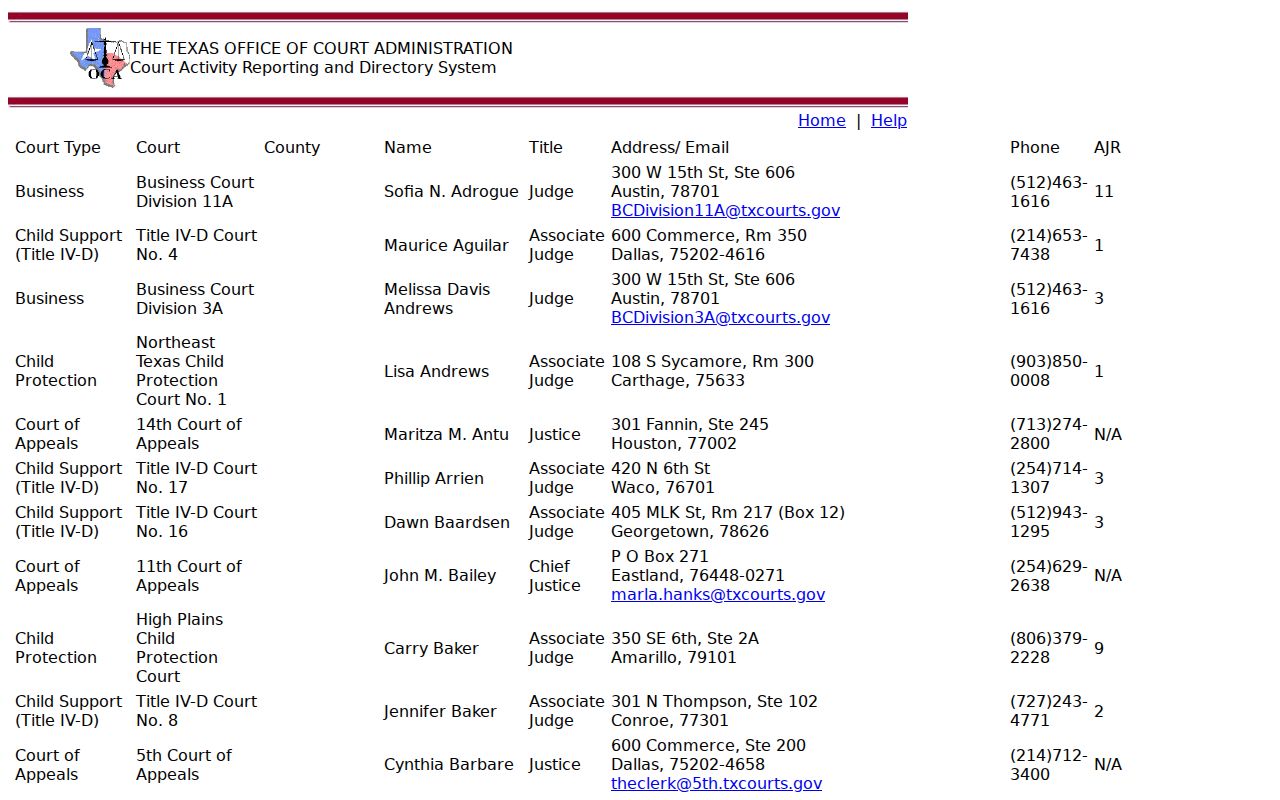
That roster supports one core rule. Before treating an empty docket result as proof that a case does not exist, confirm you searched the exact court that holds it.
Dimmit Criminal Docket Coverage Gaps
re:SearchTX opened in 2018. It reaches documents across the state, yet the 2024 Judicial Branch data report flags a criminal-record coverage limit. Sealed, juvenile, restricted, older, local-only, and not-yet-integrated material can all be absent from an online docket result. One empty statewide search proves nothing. Before concluding a record does not exist, check the clerk. Then check the court level, the spelling, the year, and the cause number.
If no case appears, search the exact cause number first. Then run a careful name search. Add a wildcard only if needed. Confirm Dimmit County plus the criminal case type. The case may sit with the County Clerk, a JP precinct, a municipal court, or a federal court instead. When a header shows but no document follows, ask the clerk whether a public redacted copy can be supplied and what fee applies.
Dimmit Criminal Dockets and OLS
The 293rd District Court directory notes Operation Lone Star matters and search-warrant work in its regional caseload. That description supplies no case count. It does explain why Dimmit County criminal docket work can reflect a multi-county court structure. Some warrant material stays excluded or limited by rule. Court staff cannot give legal advice about an entry.
Dimmit Criminal Misdemeanor Routes
A misdemeanor label alone won't identify the clerk. Class A and B cases may route to the constitutional County Court, while Class C matters can sit on a JP or municipal docket. Check the offense level and the issuing court first. That single step keeps a district search from hiding a valid lower-court result.
Dimmit Criminal Docket Dispositions
Deferred adjudication, nondisclosure, and expunction differ. A deferred disposition can remain on the docket as an event. A later process can limit public access or remove eligible material under separate rules, so only the filed order and clerk-confirmed status show which path a Dimmit County case took. Read the order, not the label.
Public Access and Sealed Criminal Dockets
Unlike executive-agency records, Texas court records do not follow the ordinary Texas Public Information Act route; Government Code Section 552.0035 points judicial-record access to Supreme Court rules and other applicable law. Rule 12 is the key one. Texas Rule of Judicial Administration 12 generally permits inspection and copying of judicial records during regular business hours unless an exception applies, though it excludes material controlled by another law, court rule, or order. Put your request in writing. Name Dimmit County, the court, the cause number, and the case style if it is public and known. Add the exact document or date range. State the copy type and delivery method. No purpose statement is required. If the clerk says the judge or court is the Rule 12 custodian, send the request there. A denial should state its reason. It must also carry appeal information. Routine case-file copies still start with the clerk that holds the docket.
Key rules:
Texas Rule of Judicial Administration 12 governs access to many judicial records and sets request, exception, redaction, cost, and appeal rules.
Texas Family Code Chapter 58 supplies confidentiality and sealing rules for juvenile records.
Texas Code of Criminal Procedure Chapter 42A provides deferred-adjudication context and points to separate nondisclosure law.
Missing Dimmit Criminal Docket Files
A partial docket calls for a focused request. Guessing wastes time. Write down the court, the public cause number, the entry title, and the date. Then ask the Dimmit County District Clerk or County Clerk about that exact item. Ask whether it is integrated online, available as a public copy, redacted, restricted, or held by a different custodian. Never send personal identifiers through an unrelated web form.
re:SearchTX uses a cart and purchase flow. The Texas Supreme Court order sets the frame: $0.10 per page with a $1 minimum per document. That covers the stated licensed-attorney and registered-user categories, plus specified legal-aid exemptions. Clerk copy and search fees follow their own statutes and office practice. Ask for the total first. A Dimmit County case search can narrow the record before you request a copy.
Never read guilt into a blank screen. Never read a live warrant into a charge row. Never read a final result into a short event title. Those entries are not rulings. The signed order, the judgment, the public disposition field, and the originating clerk are the real checks. Trust those sources.